Chevrolet Corvette Indy Concept
The Aerovette was a prototype based on XP. The difference with those XP is that the Aerovette of the year 72 used a two-rotor Wankel engine. Designer Bill Mitchell later prepared another Aerovette, with two Wankel two-rotor engines delivering 420 HP.
But over the course of the 1970s the oil crisis delayed the development of prototypes, although it did not completely stop it. Corvette's main designers, Mitchel and Duntov, were no longer in 1977. The new designer was David McLellan, who did not consider it interesting to continue with the Aerovette.
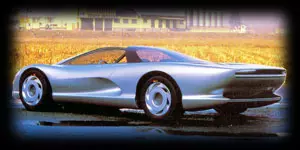
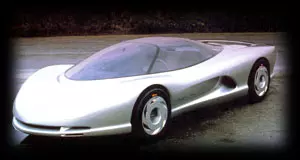
The Corvette Indy was powered by a 32-valve DOHC biturbo V8. The V8, developed by Ilmor for competition, was 2,650 cm3 and was located in the center, between the rear axle and the passengers. It developed a power of 600 HP transmitted through a 3-speed automatic box.
The prototype accelerated from or to 100 km/h in 4.7 seconds and reached a top speed of 338 km/h. What was interesting was that it had traction and steering on all four wheels... apart from active suspension and a low weight of just 1,500 kg.
Dimensions: approx
- Weight: 1,497 kg.
- Length: 4,801 mm
- Height: 1,090 mm
- Wheelbase: 2,494 mm
- Weight: 1,496 kg.
Benefits
- 0 to 100 km/h: 4,7 sec
- Top speed: 338 km/h
Learn more about Corvette cars
- VIDEO Chevrolet Corvette C6
- Chevrolet Corvette 427 1967
- Corvette Callaway Sledgehammer
- Chevrolet Corvette Z06
- Chevrolet Corvette C6
© Adrián Blanco 2005 — Prohibited the total or partial reproduction of text and/or images without explicit written consent of the author. —